Skip to content

Example breakdowns

Reverse-engineer the ad.
Keep the mechanism.

Everyone can tell you a famous ad is funny, or minimal, or brave. That read teaches you nothing — it describes the surface and calls it insight. Below: five ads you already know, broken down to the structural decisions that made them work. The surface read, then the actual mechanism. The difference is what you can steal.

Flagship breakdown · Commercial · 2010

The Man Your Man Could Smell Like

Old Spice — Wieden+Kennedy

A thirty-second spot that repositioned a brand your grandfather wore into a benchmark for viral advertising. One take, one monologue, one horse.

The surface read

A shirtless guy, a horse, thirty seconds of non-sequiturs. Random absurdist humor that happened to go viral. Lightning in a bottle — funny, but nothing to learn from.

The actual mechanism

Deploys impossible, continuous transitions to manifest a fantastical, aspirational reality — and aims the whole monologue at the partner, not the wearer. "Hello, ladies" is a targeting decision, not a joke. The ad reframes who the purchase decision belongs to, then makes the product the visible cause of every impossible transformation.

How it moves — beat by beat

  1. 01

    The setup and challenge

    A medium shot, a shower, direct eye contact: "Hello, ladies. Look at your man. Now back to me." The camera holds. The direct address establishes the comparison engine the whole ad runs on — you are being spoken to about someone else.

  2. 02

    The first transformation

    The bathroom dissolves into a yacht deck without a visible cut. Same framing, same monologue, new world. The transition is practical — set design and choreography, not CGI — which is exactly why it reads as magic instead of effects.

  3. 03

    The impossible gifts

    An oyster opens to reveal tickets; the tickets become diamonds; the diamonds become the product — all in one continuous hand. Absurd generosity, compressed into a single visual metaphor: anything is possible, and the bottle is the cause.

  4. 04

    The grand finale

    "I'm on a horse." The yacht has become a beach, the man is astride a white horse, and the deadpan punchline lands precisely because nothing in the delivery acknowledges that anything strange has happened.

The transferable principles

The Impossible Single Take

Build the narrative as one apparently unbroken shot with impossible set changes done practically.

Defying expectations while appearing effortless forces rewatching — viewers come back to figure out how, and engagement compounds.

Direct, Confident Address

A charismatic spokesperson speaks straight into the lens, self-aware and unwavering.

Breaking the fourth wall makes the viewer a participant. Conviction sells absurdity that hedging would kill.

Aspirational Absurdity

Pair luxury imagery with illogical, over-the-top transformations.

The absurdity lets the brand promise grand outcomes without pretension — memorable precisely because it refuses to be taken literally.

Product as Enabler

The product appears at every transformation as the visible cause of the extraordinary outcome.

Moves past demonstration into symbolic empowerment — the bottle is the plot device, not a prop.

The specificity test

Swap the creator with a direct competitor. Does the mechanism survive?

The ad does not say "smell good." It targets a precise desire — a partner who is charming, capable, and slightly fantastical — and contrasts it against the perceived mundane reality of "your man." Swap the brand for a competitor and the direct-address structure still cuts; that is why it built a template instead of a one-off.

What it couldn't do

It does not do deep emotional storytelling, character development, or social commentary. Its strength is immediate, shocking, humorous impact — not a narrative arc. Knowing what a mechanism cannot do is half of knowing the mechanism.

What to steal

Seamless, impossible transitions inside one apparently continuous shot — magical realism that makes the ad inherently rewatchable, with the product as the constant, understated catalyst.
Four more, same method.

Different decades, different formats, same gap between what people say about the work and what the work actually does.

Commercial · 2012

Our Blades Are F***ing Great

Dollar Shave Club

The surface read

A founder swears in a warehouse. Low budget, crude joke, viral fluke — the kind of thing you can't plan.

The actual mechanism

Replaces product demonstration with a founder's absurd, direct, self-aware monologue. The low-fi aesthetic is the argument: every cheap-looking frame says the money went into the blades, not the celebrity endorsement it openly mocks.

What to steal

A charismatic, deadpan founder delivering a no-nonsense message through absurdist vignettes — attacking industry excess while demonstrating the product, in an aesthetic that reads authentic because it refuses to be slick.

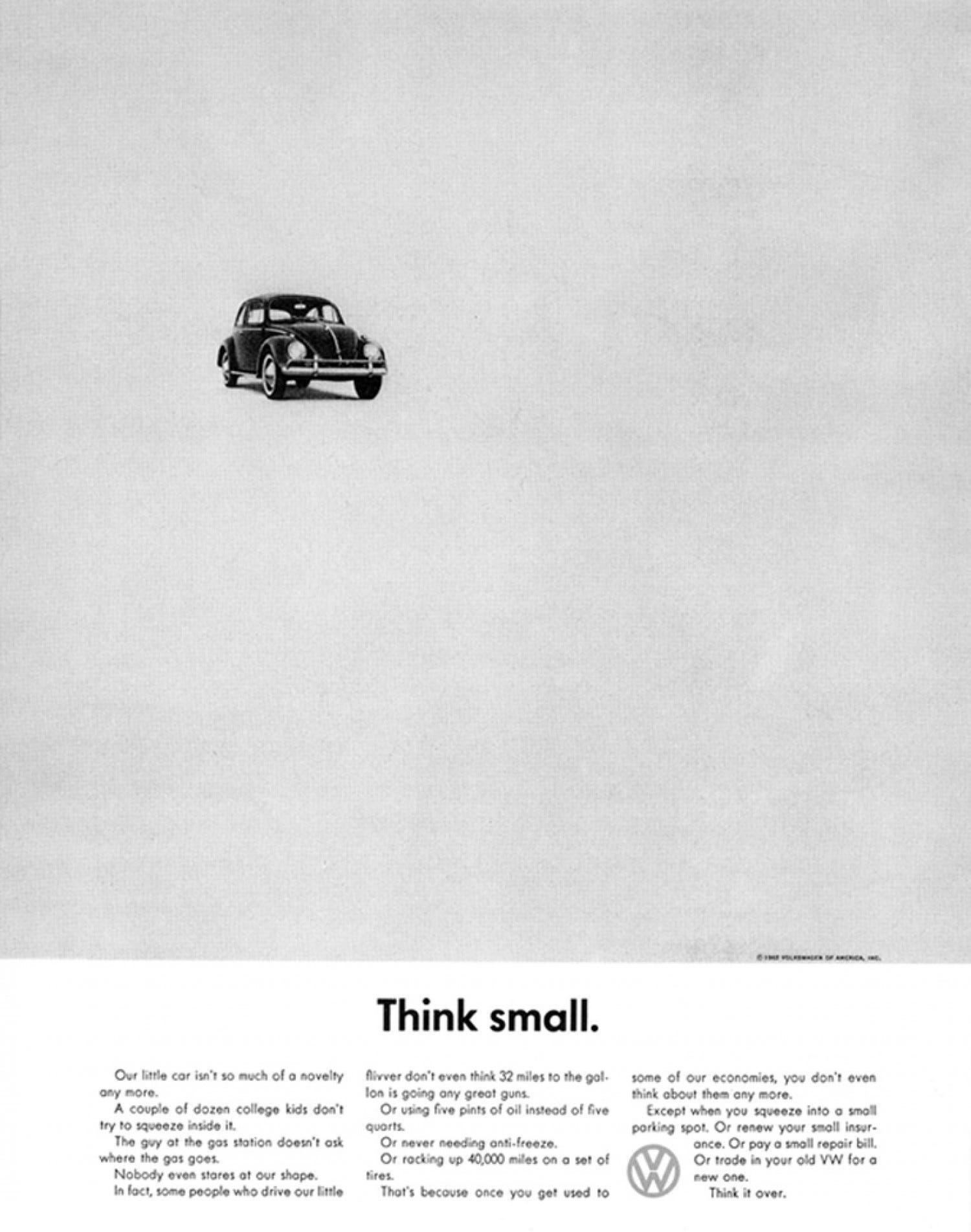
Print advertisement · 1959

Think Small

DDB — Julian Koenig, Helmut Krone, for Volkswagen

The surface read

A tiny car on a big white page. Minimalism before minimalism was a personal brand. Tasteful, historical, museum piece.

The actual mechanism

Amplifies the product's perceived negative by isolating it in vast negative space. The ad makes you experience the smallness before a word of copy defends it — the layout is the argument, and the dense, self-deprecating text rewards the attention the emptiness bought.

What to steal

Challenge the dominant aesthetic of your category by doing the opposite. If everyone is loud, be quiet. Use the inversion as a cognitive hook, then back it with genuine, detailed substance.

Commercial · 2018

Dream Crazy

Nike — Wieden+Kennedy

The surface read

A celebrity endorsement with a controversy attached. Nike bet on Kaepernick and the news cycle did the media buy.

The actual mechanism

Reverses societal judgment by affirming "crazy" ambitions through specific, diverse individual narratives. Being called crazy is reframed as evidence the ambition is real — and the controversial narrator is the proof of concept, embodying sacrifice for belief rather than describing it.

What to steal

Reframe perceived negatives as affirmations of ambition, and build a universal message out of highly specific individual stories instead of stating the theme outright.

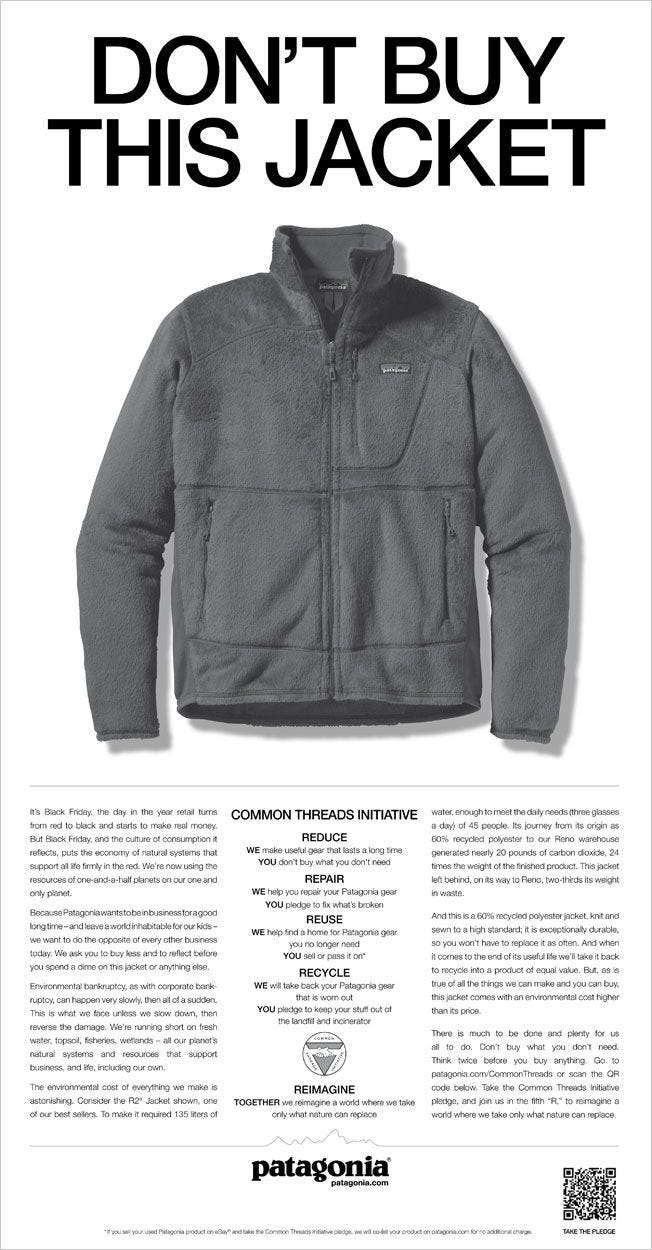
Print advertisement · 2011

Don't Buy This Jacket

Patagonia

The surface read

A brand tells you not to buy its product, knowing you will anyway. Reverse psychology with a recycled-paper conscience.

The actual mechanism

Reverses the sales imperative by advocating against purchase on the year's peak buying day — then immediately justifies the contradiction with detailed environmental cost accounting. The shock is the hook; the receipts convert the double-take into conviction.

What to steal

The courage to contradict the premise of your own industry, backed by transparent reasoning and an actionable alternative. Honesty about your product's costs builds more loyalty than a discount.

This works on your references too.

Every breakdown on this page came out of the same engine. Feed it the ad — or the film, the record, the poster — that moved you, and get the mechanism back. A methodology, not a mood board.

Break down your own reference →